What Is a Mattress Protector & Why Do I Need One?

A mattress protector is a thin, removable waterproof cover that sits over your mattress to guard against spills, stains, allergens, bacteria, plasticizers, flame retardants, and everyday wear. It helps keep your sleep surface clean and extends the life of your mattress, making it a simple upgrade with long-term value.
Mattresses can be an expensive investment, and your health is an even more valuable investment. With a mattress protector, you can safeguard your investment to ensure it lasts longer and that you sleep in a hygienic environment that helps you feel your best. In this guide, we explore everything you need to know about mattress protectors, from what they’re used for to the different types and more.
Key Takeaways
- A mattress protector, sometimes called a mattress cover (not to be confused with the actual cover of the mattress), is a protective barrier you place on the top of your mattress.
- Mattress protectors are used to protect your mattress from spills, dust mites, allergens, bacteria, fungi, flame retardants, skin cells, plasticizers, pet and human bodily fluids, and more.
- There are different types of mattress protectors, including fitted protectors that cover the top and sides of your mattress and mattress encasements that fully cover your mattress, providing 360-degree protection.
- It’s recommended that you place sheets over your mattress protector to enhance the comfort of your bed and your sleeping experience.
- You should wash your mattress protector every two months or when it gets dirty from a spill or other accident.
What Is a Mattress Protector?
A mattress protector, sometimes referred to as a mattress cover, sits right on top of your mattress and acts as a protective barrier from spills, bacteria, and some allergens. Mattress protectors fit like fitted sheets and can either cover the top and sides of your mattress or fully encase it.
The main benefit of mattress protectors is that they are often liquid-proof, making it easier to clean a mattress from accidents. So, whether you were wining and dining and spilled your glass while binging Netflix or your dog got a little too excited when he came to wake you up, a mattress protector will ensure no liquid seeps through to your mattress.
Additionally, mattress protectors can be a great way to reduce nighttime allergies, as they can prevent pollen, dust mites, and pet dander from getting embedded in your mattress and flying into the air when you toss and turn at night.

But do you need a mattress protector? Take a look at some surprising stats you may not know about the mattress you sleep on every night below:
- Adults produce about 100 liters of sweat in bed per year — that’s roughly 26 gallons, or enough to fill a little less than two kegs of beer.1
- Rolling from your back to your stomach while you sleep can resuspend particles trapped in your bed into the air.2
- Studies have found that human beds are dirtier than those of chimpanzees, harboring more bacteria that stem from our own bodies, including skin and oral bacteria.3
- Along with millions of bacteria, make sure you say “Hi” to the 100,000 to 10 million dust mites that may be living, defecating, and reproducing on your mattress.4
- One study found that pillows between 1.5 and 20 years old can be home to 4 to 17 different species of fungus — that number can be much higher for mattresses.5
Mattress protectors are one of the most important accessories you can have when it comes to protecting the surface you sleep on. Not only will they increase the longevity of your mattress, but they’re also extremely affordable and keep you protected from your mattress.
What Does a Mattress Protector Do?
As you now know, you’re not alone when you sleep. So, how do you protect yourself from all the nasties that are burrowing in your mattress? With a mattress protector.
Below is a list of what mattress protectors guard against:

Blocks dust mites
These tiny creatures are almost invisible to the human eye and are less than a millimeter in length. Dust mites thrive in warm, humid climates (aka your bed) and are one of the most common allergens people suffer from.6 Dust mite feces and their bodies can lead to nighttime nasal congestion, a runny nose, coughing, itchy skin, throat, eyes, nose, and mouth, and asthma.
Protects against spills and stains
A mattress protector’s protective layer is often liquid-proof and will guard against spills from beverages, sweat, body oil, and other bodily fluids. If any liquids come in contact with it, it can easily be washed and dried.
Protects from pet hair, dander, and accidents
We know, there’s almost nothing better than sleeping with your dog. Seeing those puppy eyes and wagging tails is impossible to resist, especially when they’re begging to cuddle up with you when the sun goes down. A mattress protector will ensure no liquids, dirt, dander, hair, germs, or other debris brought in by your pet tarnishes your mattress.
Blocks bacteria and germ buildup
Millions of bacteria are found on mattresses. While most won’t cause any harm, you can sleep peacefully at night knowing a mattress protector will keep these microorganisms away so you can retain a clean-looking and fresh-smelling mattress longer than without a protector.
Creates a barrier against fungi
Fungal spores are another microorganism that can cause allergic reactions to those susceptible, such as runny and stuffy noses, headaches, itching, wheezing, asthma, and bronchial diseases.7
Adds a layer between you and flame retardants
To prevent the start and growth of fires, mattress manufacturers are legally required to meet certain flammability requirements, which often leads to the addition of flame retardants in the mattress or mattress cover. While flame retardants are designed to prevent or slow down a fire, they can be hazardous to humans and the environment.8 While flame retardants do meet federal safety standards, some people prefer the added peace of mind that comes from creating an extra layer between themselves and the surface of where they sleep. A quality mattress protector will keep flame retardants at bay while also protecting against spills, allergens, and everyday wear.
Prevents the buildup of skin cells
Your skin is constantly changing and regenerates itself every four weeks.9 So, where does all that skin go? Into the air in the form of skin cells. And who loves skin cells? Dust mites. When you sleep, you will shed thousands of skin cells, which will get caught on your mattress. A mattress protector will allow you to keep skin cells and dust mites out of your mattress, thanks to the ability to wash it regularly.
Reduces exposure to plasticizers
Phthalates, also called plasticizers, are used to make plastics more elastic.10 In mattresses, they are sometimes used for the foam to make the mattress more cushioned. However, similar to flame retardants, plasticizers can cause a variety of health problems, such as asthma.11
Do You Need a Mattress Protector?
Yes. Of all the mattress accessories out there, a mattress protector is arguably one of the most important ones you should buy. You spend 8 hours a day, 365 days of the year, in your bed, so it’s crucial to take care of your bed and your health. A mattress protector will keep you and your partner safe from harmful chemicals, bacteria, dust mites, and other sneaky creatures. With a mattress protector, you can also reduce how often you replace your mattress, as it can increase the lifespan of your mattress by three times.
A warranty is another thing that a mattress protector protects. Because mattresses are an expensive investment, they often come with a warranty in case something goes wrong due to a fault by the manufacturer. However, there are eligibility requirements that come with a warranty, and simple things such as a spill can void your warranty, leaving you with an empty bank account and a mattress you no longer want.
What Are The Different Types of Mattress Protectors?
There are different types of mattress protectors on the market you can choose from, such as a mattress encasement or a fitted mattress protector. A mattress encasement fully encases your mattress, featuring a large zipper and 360-degree protection against spills, stains, dust mites, and allergens. Think of a mattress encasement as a pillowcase for your mattress, offering full coverage for ultimate protection. A fitted mattress protector is more similar to a fitted bed sheet, covering the top and sides of your mattress while leaving part of the bottom exposed. Fitted mattress protectors are easier to remove while still providing excellent protection against everyday messes.
At Layla, we offer three different types of mattress protectors that are great at preventing night sweats, protecting your mattress, and protecting you. Paired with hypoallergenic bedding, you can keep your nasal passages clear of dust, allergens, and harmful bacteria. Here’s how we can help you sleep better:
| Layla Mattress Protector Comparison Chart | |||
|---|---|---|---|
| Feature | Essential Mattress Protector | Cooling Mattress Protector | Full Encasement Mattress Protector |
| Fit | Up to 14” deep | Up to 14” deep | Up to 14” deep |
| Liquid Protection | Liquid-proof | Liquid-proof | Liquid-proof |
| Breathability | Breathable | Breathable + cooling fibers | Breathable |
| Stain Resistance | Yes | Yes | Yes |
| Dust Mite Barrier | Yes | Yes | Yes |
| Hypoallergenic | Yes | Yes | Yes |
| Noise Level | Silent | Silent | Silent |
| Corner Design | Overlocking corners | Overlocking corners | Overlocking corners |
| Cooling Features | No | Cooling fibers | No |
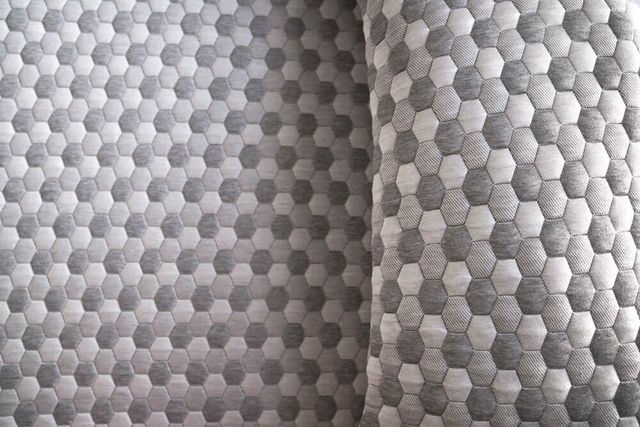
| Comfort Enhancements | Stretchy fabric | Extra padding, hexagon stitching | Stretchy fabric |
| Coverage Type | Surface protection (top + sides) | Surface protection (top + sides) | Full encasement (360° coverage) |
| Bed Bug Protection | No | No | Yes |
| Ease of Use | Easy on/off (fitted style) | Ease on/off (fitted style) | More involved (zippered encasement) |
Essential Mattress Protector
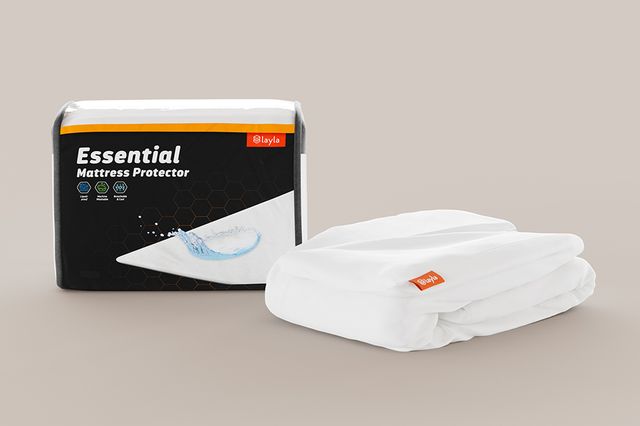
The Layla® Essential Mattress Protector is our most basic mattress protector that offers all the protective qualities you need to sleep soundly at night. Some of the features of the Essential Mattress Protector:
- Fits a mattress up to 14” deep
- Liquid-proof
- Breathable
- Stain resistant
- Dust mite barrier
- Hypoallergenic
- Silent
- Overlocking corners
Do You Need a Mattress Protector?
So, do you need a mattress protector? Yes—bottom line. Of all the mattress accessories out there, a mattress protector is arguably one of the most important ones you should buy. You spend 8 hours a day, 365 days of the year, in your bed, so it’s crucial to take care of your bed and your health. A mattress protector will keep you and your partner safe from harmful chemicals, bacteria, dust mites, and other sneaky creatures and can also increase the lifespan of your mattress by three times.
A warranty is another thing a mattress protector protects. Because mattresses are an expensive investment, they often come with a warranty in case something goes wrong due to a fault by the manufacturer. However, there are eligibility requirements that come with a warranty, and simple things such as a spill can void your warranty, leaving you with an empty bank account and a mattress you no longer want.
What Are The Different Types of Mattress Protectors?
There are different types of mattress protectors on the market you can choose from, such as a mattress encasement or a fitted mattress protector. A mattress encasement fully encases your mattress, featuring a large zipper and 360-degree protection against spills, stains, dust mites, and allergens. Think of a mattress encasement as a pillowcase for your mattress, offering full coverage for ultimate protection. A fitted mattress protector is more similar to a fitted bed sheet, covering the top and sides of your mattress while leaving part of the bottom exposed. Fitted mattress protectors are easier to remove while still providing excellent protection against everyday messes.
At Layla, we offer three different types of mattress protectors that are great at preventing night sweats, protecting your mattress, and protecting you. Paired with hypoallergenic bedding, you can keep your nasal passages clear of dust, allergens, and harmful bacteria. Here’s how we can help you sleep better:
Essential Mattress Protector
The Layla® Essential Mattress Protector is our most basic mattress protector that offers all the protective qualities you need to sleep soundly at night. Some of the features of the Essential Mattress Protector:
- Fits a mattress up to 14” deep
- Liquid-proof
- Breathable
- Stain resistant
- Dust mite barrier
- Hypoallergenic
- Silent
- Overlocking corners
Cooling Mattress Protector
The Layla® Cooling Mattress Protector takes this up a notch (besides the heat) compared to the Essential Mattress Protector. Hot sleepers who wake up in a pool of sweat, rejoice! The cooling fibers in the Cooling Mattress Protector wick moisture and heat away to keep you calm, cool, and collected while you’re getting your shut-eye.
Along with the same benefits of the Essential Mattress Protector, the Cooling Mattress Protector offers these additional features:
- Cooling fibers
- Extra padding
- Hexagon stitching
Full Encasement Mattress Protector
If you’re ready to go big or go home, invest in the Layla® Full Encasement Mattress Protector. This mattress protector fully wraps your mattress with a six-sided protector that can even lock out intruders such as bed bugs. Along with the benefits of our Essential Mattress Protector, our Full Encasement Mattress Protector offers:
- Full encasement
- Bed bug protection
- Stretchy fabric
All of our mattress protectors are constructed with a quiet polyester fabric. Whereas most mattress protectors sound like a vinyl record being scratched, ours is completely silent, so you can get the best sleep possible.
Not only that, but our mattress protectors are machine washable and dryable, making it easy to clean up after all of life’s messes. They are fitted with elastic corners to fit the shape of your bed and are made with cooling fibers to give you a comfortable sleep all night long.
Mattress Protector FAQs
What is the difference between a mattress pad and a mattress protector?
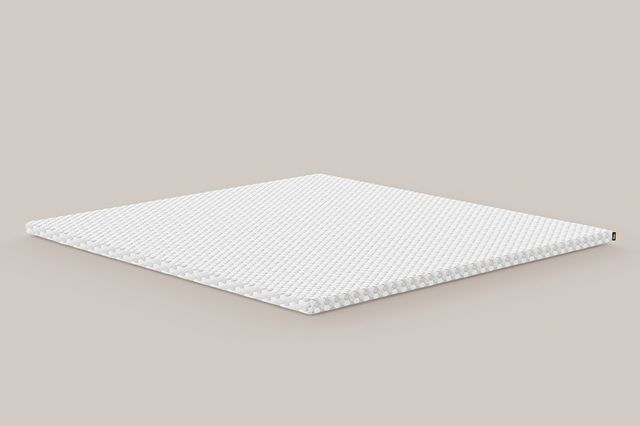
The primary difference between a mattress pad vs. protector lies in the purpose. A mattress protector is designed to protect your mattress from life’s everyday messes, from spilled beverages to sweat, dust mites, and allergens. Mattress pads or mattress toppers, on the other hand, are designed to add an additional layer of comfort to your mattress with the help of memory foam or similar materials. Because a mattress pad is placed over your mattress, it can provide some protection from minor spills and stains, but it won’t offer the full protection a mattress protector provides and will also be damaged by the accident, unless it’s placed underneath a mattress protector.
Do you put sheets over a mattress protector?
Yes, it’s often recommended to put sheets over your mattress protector. Because mattress protectors often employ the power of synthetic materials, such as polyurethane, to create a liquid-proof barrier, even the best protectors might not feel as plush and luxurious as a set of sheets.
Many mattress protectors aren’t designed to be directly slept on and don’t need to be washed as often as sheets, either. By covering your mattress protector with high-quality sheets like bamboo sheets, you can create a soft and comfortable sleeping surface that enhances your overall nighttime slumber.
Can you wash a mattress protector?
Yes, you can (and should) wash your mattress protector. For those with the Layla Mattress Protector, you can place it right in your washing machine on the cold setting. When it comes time to dry, dry on the low or no heat setting. Each mattress protector will have different washing and drying instructions, so make sure to read the manufacturer’s label.
While you should wash your comforter every month and sheets every week, mattress protectors can go longer periods between wash cycles. Generally, you should wash your mattress protector every two months. However, if you have any accidental spills or messes that your mattress protector blocks, it should be washed accordingly.
Do mattress protectors prevent bed bugs?
Not all mattress protectors prevent bed bugs. To avoid having to check your mattress for bed bugs, you’ll need a full encasement mattress protector that provides 360-degree protection. Fitted mattress protectors that only cover the top and sides of your mattress offer a basic level of protection against spills, stains, and allergens, but aren’t designed to prevent bed bugs. With a mattress encasement protector, you can create a protective barrier against bed bugs, as the zipper closure is bed bug-proof, thanks to materials that these pesky pests can’t penetrate or bite through.
How do you choose a mattress protector?
Not all mattress protectors are built the same, which is why reviewing the different types of mattress covers and brands is essential to making the right choice. To narrow down your choice to give your mattress the protection it deserves, consider these key factors:

- Noise: No one wants to wake up after every toss and turn because their mattress protector sounds like nails on a chalkboard. Look for mattress protectors that use a blend of synthetic and natural materials to reduce and eliminate noise, ensuring a peaceful sleep each night.
- Comfort: Your mattress protector shouldn’t diminish the comfort of your bed. Search for materials that aren’t irritating to your skin and keep you comfortable throughout your slumber.
- Waterproofing: The main reason for using a mattress protector is to prevent spills and accidents from ruining your mattress. With that said, not every protector on the market provides a true protective barrier. Avoid having to remove blood stains from your mattress from a cut or an accidental spill of coffee in the morning with a mattress protector that does its job.
- Cleanability: When it does come time to freshen up your mattress protector, make sure it comes with simple cleaning instructions that don’t require several steps to achieve a true clean. Compatibility with your washing machine and dryer can help make your bedroom cleaning routine a breeze.
- Breathability: Mattress protectors block sweat stains, which means they shouldn’t cause them either. Ensure your mattress cover is constructed with breathable materials that allow for adequate airflow to keep your temperature regulated and your body cool at night.
Do mattress protectors make you sleep hot?
No, most modern mattress protectors are designed to be breathable and shouldn’t make you sleep hot. Many use moisture-wicking fabrics or thin waterproof membranes that allow airflow. If you’re a hot sleeper, you can look into cooling mattress protectors made with materials like cooling fibers woven into the fabric to help regulate temperature.
How long does a mattress protector last?
A mattress protector typically lasts between 1 and 3 years, depending on quality, frequency of washing, and daily use. Waterproof layers can wear down over time, especially with frequent laundering. Replacing it periodically ensures it continues to provide effective protection against spills, allergens, and general wear.
Do I need a mattress protector for a guest room?
Yes, a mattress protector is a smart addition for a guest room, as it helps protect against accidental spills, allergens, and general wear from different slippers. Since guest beds aren’t used daily, a protector also helps keep the mattress fresh and clean between visits with minimal maintenance.
How do you choose the right mattress protector size?
Similar to bedding, choose a mattress protector that matches your mattress size and depth. Check the pocket depth to ensure it fits securely, especially if you have a thicker mattress. A proper fit prevents shifting, bunching, and gaps, ensuring consistent protection and comfort. Common mattress sizes include:
- King size mattresses
- Queen size mattresses
- Full size mattresses
- Twin XL size mattresses
- Twin size mattresses
- California king size mattresses
Most mattress protectors, including all of Layla’s mattress protectors, come in these standard sizes, so you can find a protector that matches your mattress.
Sleep Soundly With a Mattress Protector
What is a mattress protector, and do you need one? A mattress protector is a simple cover that acts as a shield to keep harmful organisms, such as fungal spores, dust mites, bacteria, and chemicals, away from you while you sleep.
They’re also liquid-proof, effectively blocking any beverages, bodily fluids, and other liquids from entering your mattress. And yes, you need one. If you wake up feeling congested or not 100%, it may be because allergies caused by dust mites and bacteria are irritating your body.
With a mattress protector from Layla Sleep, you’ll wake up on the right side of the bed, ready to seize the day every morning.
References
- Woodcock, AA & Steel, N & Moore, Caroline & Howard, Susan & Custovic, Adnan & Denning, David. (2006). Fungal contamination of bedding. Allergy. 61. 140-2. https://www.researchgate.net/publication/7406800_Fungal_contamination_of_bedding
- Boor, B.E., Spilak, M.P., Corsi, R.L. and Novoselac, A. (2015), Characterizing particle resuspension from mattresses: chamber study. Indoor Air, 25: 441-456. https://onlinelibrary.wiley.com/doi/abs/10.1111/ina.12148
- Thoemmes MS, Stewart FA, Hernandez-Aguilar RA, Bertone MA, Baltzegar DA, Borski RJ, Cohen N, Coyle KP, Piel AK, Dunn RR. Ecology of sleeping: the microbial and arthropod associates of chimpanzee beds. R Soc Open Sci. 2018 May 16;5(5). https://pubmed.ncbi.nlm.nih.gov/29892462/
- Dillard, David. Top Dust Mite Hot Spots in Bedrooms: How to Identify and Eliminate Them. Sleep and Sinus Centers of Georgia. April 16, 2026. https://sleepandsinuscenters.com/blog/top-dust-mite-hot-spots-in-bedrooms-how-to-identify-and-eliminate-them
- Woodcock AA, Steel N, Moore CB, Howard SJ, Custovic A, Denning DW. Fungal contamination of bedding. Allergy. 2006 Jan;61(1):140-2. https://pubmed.ncbi.nlm.nih.gov/16364170/
- National Institute of Environmental Health Sciences. Dust Mites and Cockroaches. March 6, 2026. https://www.niehs.nih.gov/health/topics/agents/allergens/dustmites
- University of Worcester. What Are Fungal Spores? https://www.worcester.ac.uk/about/academic-schools/school-of-science-and-the-environment/science-and-the-environment-research/national-pollen-and-aerobiology-research-unit/What-are-fungal-spores.aspx
- National Institute of Environmental Health Sciences. Flame Retardants. March 19, 2026. https://www.niehs.nih.gov/health/topics/agents/flame_retardants
- InformedHealth.org [Internet]. Cologne, Germany: Institute for Quality and Efficiency in Health Care (IQWiG); 2006-. In brief: How does skin work? [Updated 2025 Apr 22]. Available from: https://www.ncbi.nlm.nih.gov/books/NBK279255/
- Wang Y, Qian H. Phthalates and Their Impacts on Human Health. Healthcare (Basel). 2021 May 18;9(5):603. https://pmc.ncbi.nlm.nih.gov/articles/PMC8157593/
- Kim YM, Kim J, Cheong HK, Jeon BH, Ahn K. Exposure to phthalates aggravates pulmonary function and airway inflammation in asthmatic children. PLoS One. 2018 Dec 17;13(12). https://pmc.ncbi.nlm.nih.gov/articles/PMC6296560/